
 OC Apartment Brokers
In July 2019, the U.S. surpassed its previous record for longest economic expansion. The economy has continued to grow for over a decade since emerging from the Great Recession in June 2009.
After being badly wounded in the lead-up to the 2008-2009 recession, this period of growth has been a balm for the housing market, and profitable for real estate professionals. But the lesson learned in the last recession is applicable today: what goes up… well, you know the rest.
As we look ahead to the next recession, it’s important to understand the key players involved and how recessions come about.
Monetary Policies
The National Bureau of Economic Research (NBER) defines a recession as a period of at least three quarters when a significant economic decline spreads across the economy. This activity involves multiple factors, including employment and gross domestic product (GDP).
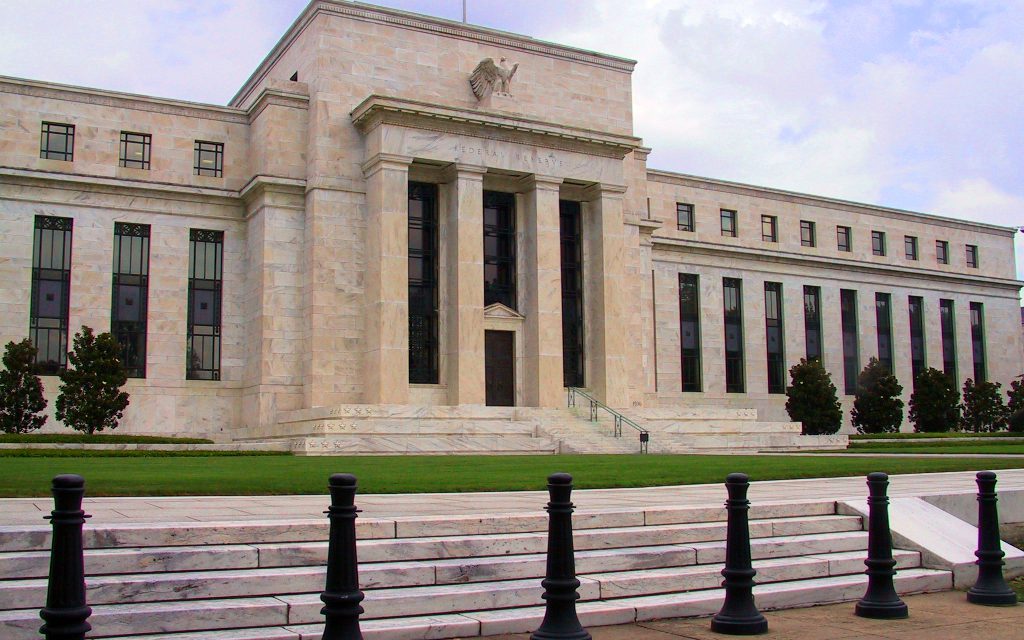
The Federal Reserve (the Fed) is capable of determining whether a recession is taking place and reacts to that condition by lowering interest rates. It can just as easily determine a bubble (the opposite situation from a recession) is taking place and correct it as well, stimulating a normal business recession. Its job is to stabilize the economy by:
• Ensuring the proper flow of money;
• Limiting consumer inflation;
• Stimulating job creation.
To fulfill its purpose, the Fed may use monetary policy in two ways. It can prospectively lean against a bubble to deflate it before it implodes and causes avoidable damage. Or, it may rely on monetary policy to merely clean up an imploded business bubble.
These two outlooks for Fed policy are known as the:
• Lean on policy;
• Clean up policy.
Under the clean up monetary policy, asset bubbles in the credit cycle are left to grow unhindered. Once the bubbles implode, the Fed simply eases monetary policy by reducing short-term interest rates and passively allowing the private recovery of jobs and spending to recharge.
Under the more aggressive lean on argument, the Fed inhibits the growth of an asset-pricing bubble, acting gradually as it occurs. This action is taken as opposed to allowing the bubble to implode, and then finally coming to the rescue and picking up the pieces.
Applied to real estate, a leaning monetary policy does not set a ceiling on the growth of home prices. Rather, access to mortgage credit is tightened to prevent price increases unsupported by the rate of consumer inflation and any increase in demographic demands for housing.
The Fed’s Toolbox
How does the Fed influence markets to reach its chosen goal?
Whether it is focused on clean up or lean on policies, the Fed’s main tools are its control over:
• The Federal Funds Rate, reflected in the 3-month Treasury Bill (T-Bill);
• Reserve balance requirements, which effectively influence the flow of lending and money supply;
• Quantitative easing (QE), a less common policy reserved for steep recessions, when the central bank purchases assets, such as the mortgage-backed bond (MBB) purchases the Fed conducted following the 2008 recession.
The interest rate on the 3-month T-Bill is managed by the Fed as the base price of short-term borrowing, their primary tool for keeping the U.S. economy balanced. The Fed uses its control over interest rates to charge private banks more or less money to borrow, and thus influence the amount of money available for banks to lend to individuals.
The Fed has direct control over this short-term rate through its Federal Funds Rate. The Fed can:
• Lower interest rates and stimulate economic growth to stave off deflation and economic stagnation; or
• Raise interest rates and slow economic growth to fight inflation and excess demand for labor.
In real estate, lower interest rates have the positive effect of increasing buyer purchasing power. When homebuyers are able to take out mortgages with lower interest rates, more of their monthly payment is able to go toward the home’s principal balance rather than paying the lender interest, thus their maximum qualified purchase price rises. As a result, average home prices tend to rise faster under a falling interest rate regime than during times of rising rates, which hold back home price increases.
A Recent Example
Before the record was broken in 2019, the longest economic expansion took place during what is now known as the Millennium Boom. During the early 2000s, economic growth was unprecedented and home prices grew at a rapid, unsustainable rate.
In other words, during the Millennium Boom, jobs, incomes and inflation all increased, but their growth was not even close to what occurred in home prices. In California, low-tier home values tripled from 2000 to 2006.
In 2004, the Fed began to raise short-term interest rates in an effort to slow the economy and thus tame price inflation and the overheated job and housing markets. But this action came too late to ease the economy into a normal business recession. Years of deregulation of financial markets and the mortgage industry made the Fed’s toolbox inept to combat the spreading sickness in the economy. What followed in 2008 was the biggest recession since the Great Depression, one that took years of job loss and foreclosures to reach recovery.
As part of its recovery operations, the Fed let their Federal Funds Rate linger at essentially zero. When that wasn’t enough to pull the economy out of its rut, it conducted three rounds of QE to inject money into the markets and induce lending and consumer purchases. This was on top of the separate government bailouts of several big players in the economy, like automakers, Big Banks, Fannie Mae and Freddie Mac.
Finally, in late 2013, the Fed began to wind down its QE3 program in response to an improving job market, and finally ended QE3 in October 2014. Nonetheless, it vowed to keep short-term interest rates low until employment was fully recovered.
This point occurred in December 2015, when the Fed finally increased the target short-term interest rate from zero to 0.25%-0.5%. It continued to increase interest rates intermittently through late-2018 and in mid-2019 the target rate currently stands at 2.25%-2.5%.
The Next Recession
After two years of rising interest rates, investors who watch the Fed for signs of the next recession are expecting it to decrease rates soon. One or maybe two rate cuts are expected in the second half of 2019, as global trade frictions cause negative ripples across all economic sectors.
« Back